
Read this lesson as text
YOUR MIND
Module 2 · 8 min
Your mind is a resource too. Let's see how it works.
Try this first: Brain on autopilot
A 2-minute experiment. Name the colour of each word, not the word itself.
What just happened?: Automatic vs deliberate
Your brain has two ways of working. Tap each one.
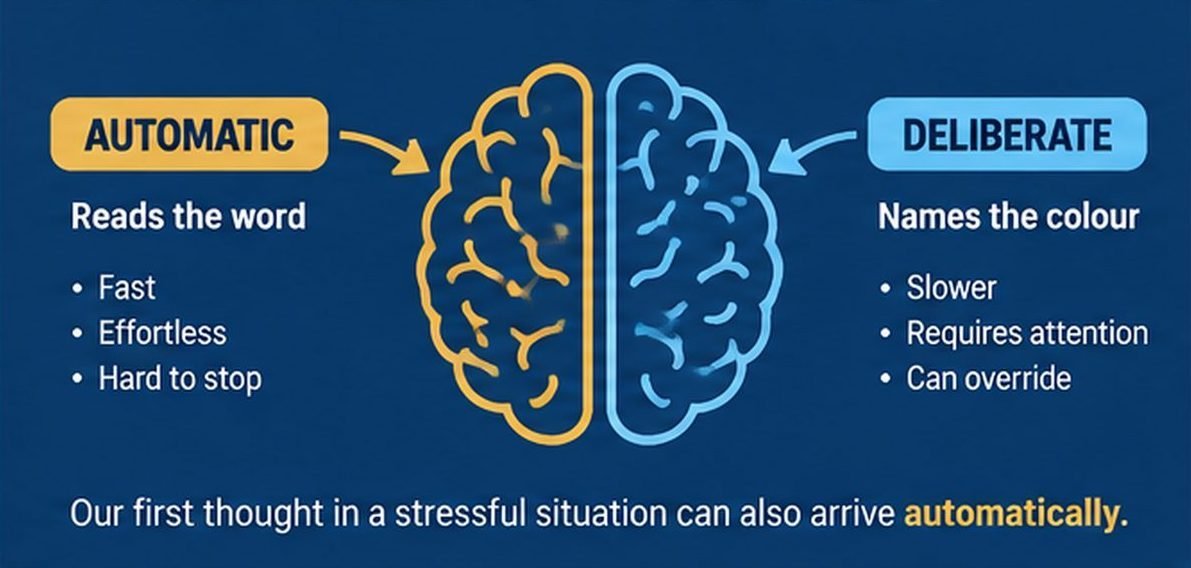
- Automatic · Reads the word. Fast, effortless, hard to stop.
- Deliberate · Names the colour. Slower, needs attention, can take over.
From situation to reaction: The first thought arrives by itself
In a stressful moment, our first thought can also arrive automatically. Tap each step.
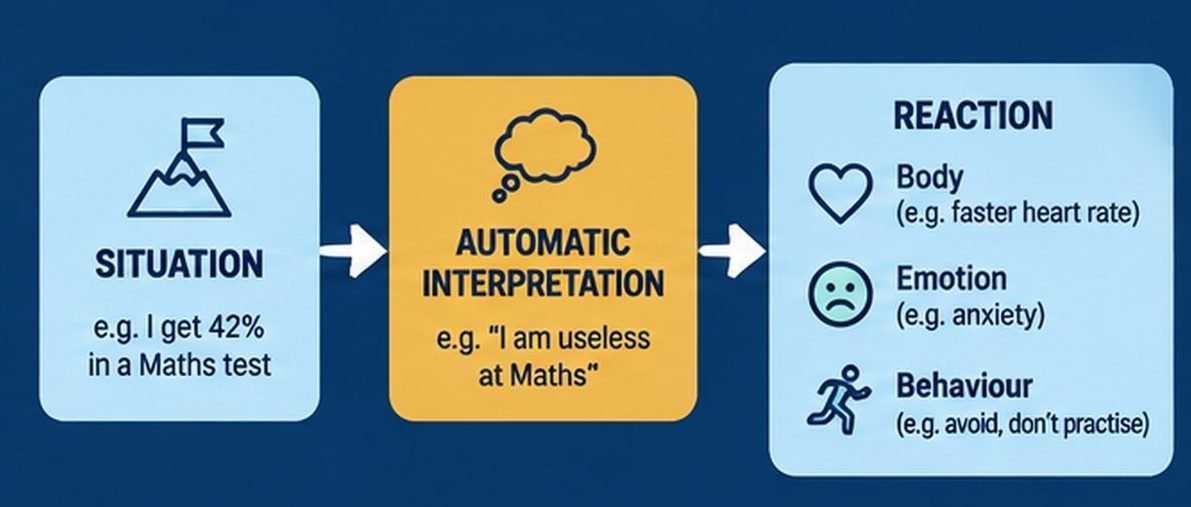
- Situation · Example: I get 42% in a Maths test.
- Automatic thought · "I am useless at Maths."
- Reaction · Body: heart beats faster. Emotion: anxiety. Behaviour: avoid Maths, stop practicing.
Your turn: Threat or challenge?
The same situation can feel like a threat or a challenge. For each thought below, tap Threat or Challenge.
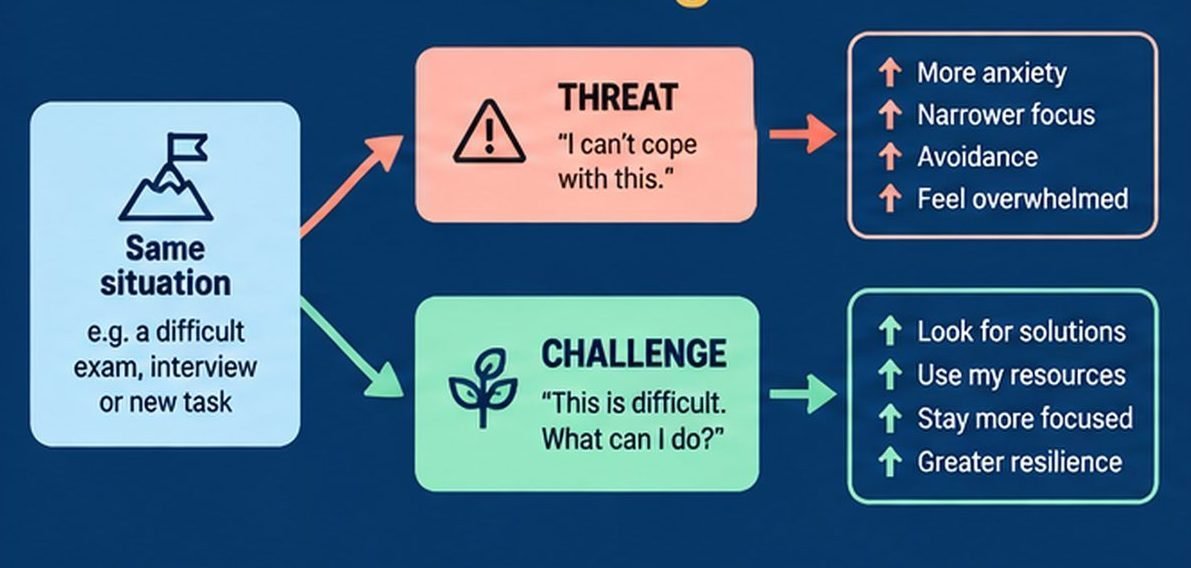
- "I can't cope with this." (Threat: Threat thoughts bring more anxiety and avoidance.)
- "This is difficult. What can I do?" (Challenge: Challenge thoughts help you look for solutions.)
- "Everyone will laugh at me." (Threat: This narrows your focus to fear.)
- "What can I learn from this?" (Challenge: This helps you use your resources.)
- "I'll never be good at this." (Threat: "Never" is rarely true. It's an automatic thought, not a fact.)
What you can do: Pause before the chain grows
One thought leads to another. A short pause can change the track.
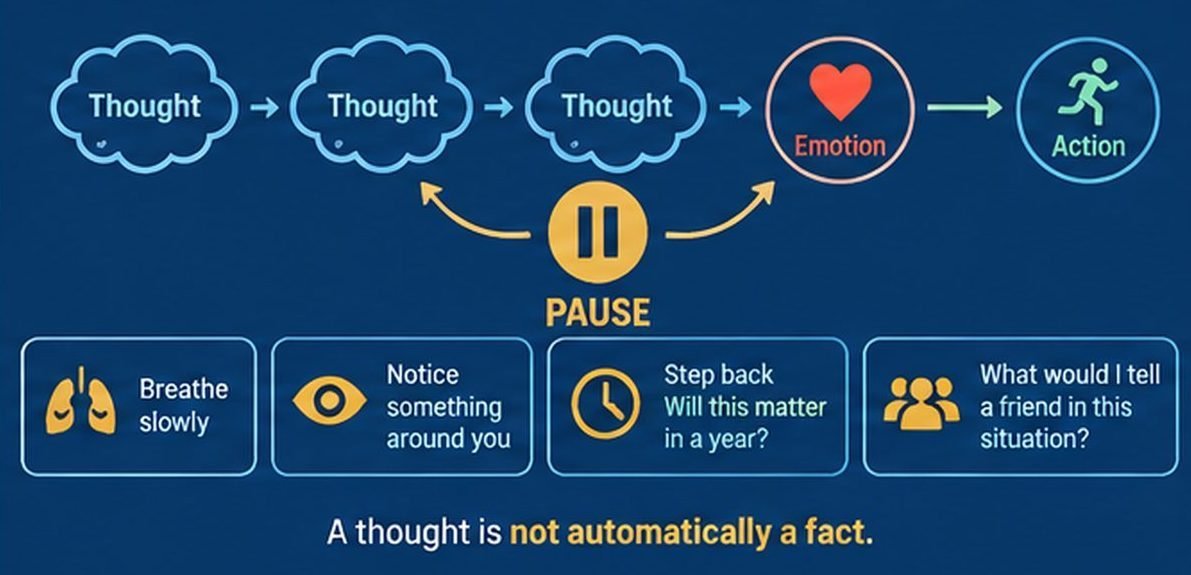
- Breathe slowly · Three slow breaths calm the body.
- Notice something around you · Bring your attention back to now.
- Step back · Will this matter in a year?
- Be your own friend · What would I tell a friend in this situation?
Remember: A thought is not a fact
You can notice a thought, question it, and choose what to do next.
“A thought is not automatically a fact.”
Play: The Thought Railway
Every stressful moment arrives at a junction. Who chooses the track?
Thinking and feeling: The rider and the elephant
Your thinking and your emotions need to work together. Tap each one.
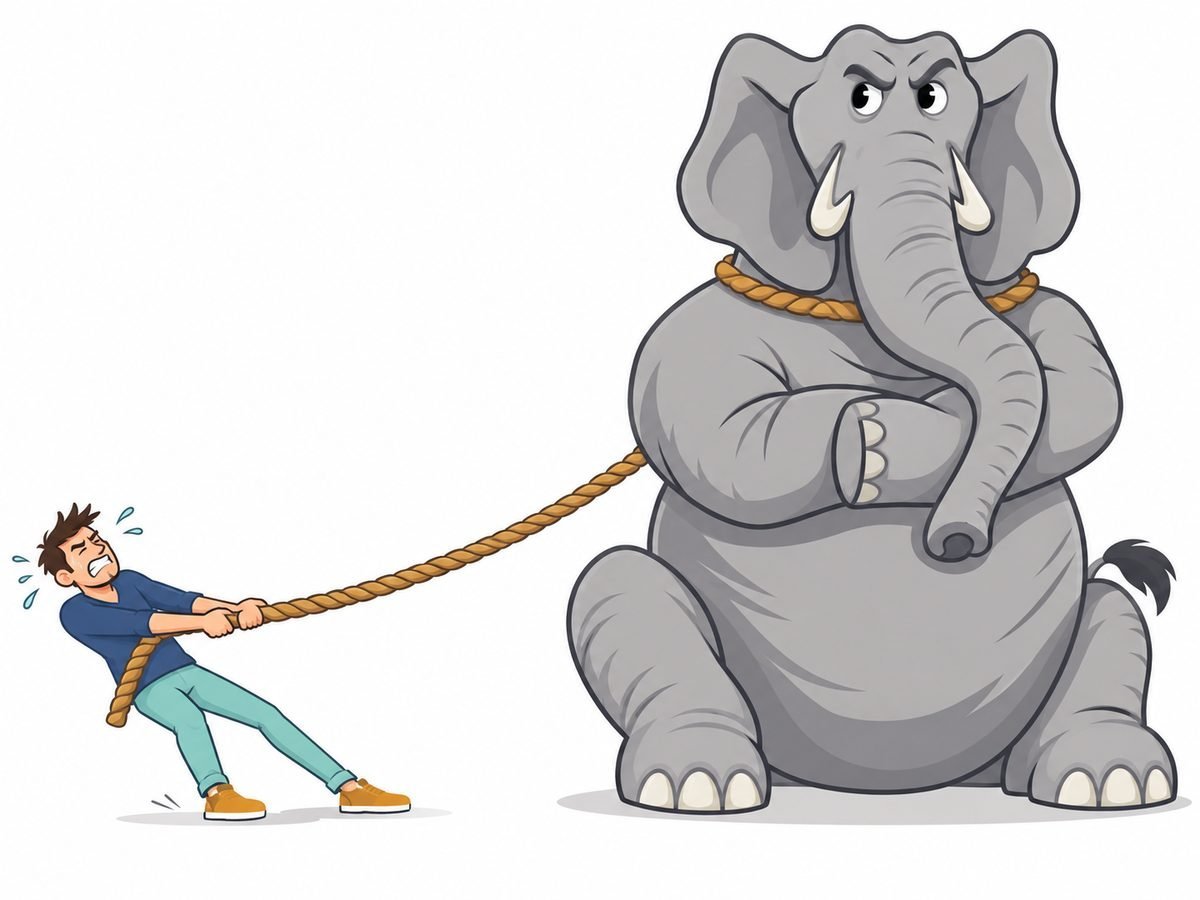
- The rider · Your thinking. Plans, sets the goal, knows where to go.
- The elephant · Your emotions. Fear, desire, self-belief, habits, motivation.
The idea: Who really decides?
Rider and elephant idea adapted from the book Switch, by Chip and Dan Heath.
“The rider may keep saying "go towards the goal". But if the elephant is frightened, doubtful or resisting, you will not move.”
What helps: How to move the elephant
- Notice what holds you back: fear of failure, fear of being laughed at, peer pressure
- Give it a reason: "I want to prove to myself I can do it." "I want to help my family."
- Take small steps and get quick wins
- Build habits, so it becomes easy
- Shape your surroundings: phone in another room while studying
- Use good feelings: curiosity, excitement, hope
Your turn: Pause & ponder
Think of a recent stressful moment. What was your first automatic thought? What could a challenge thought have been?
Apply: Try this week
When you notice a threat thought this week, pause. Take three slow breaths and ask: what would I tell a friend?
If difficult feelings stay with you for a long time, talk to someone you trust: a parent, a teacher or the school counsellor.
Well done!
Next: Module 3 · Beliefs & fears