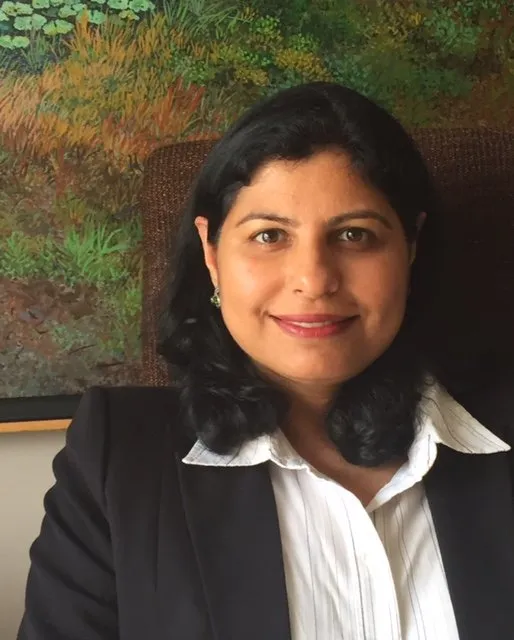
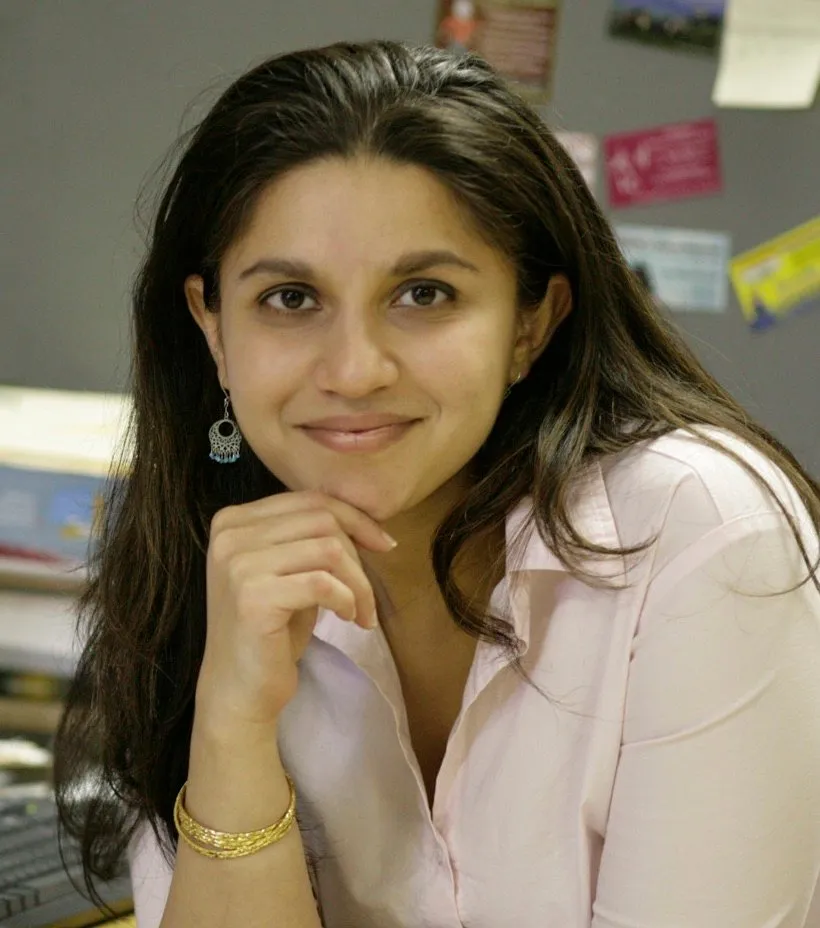
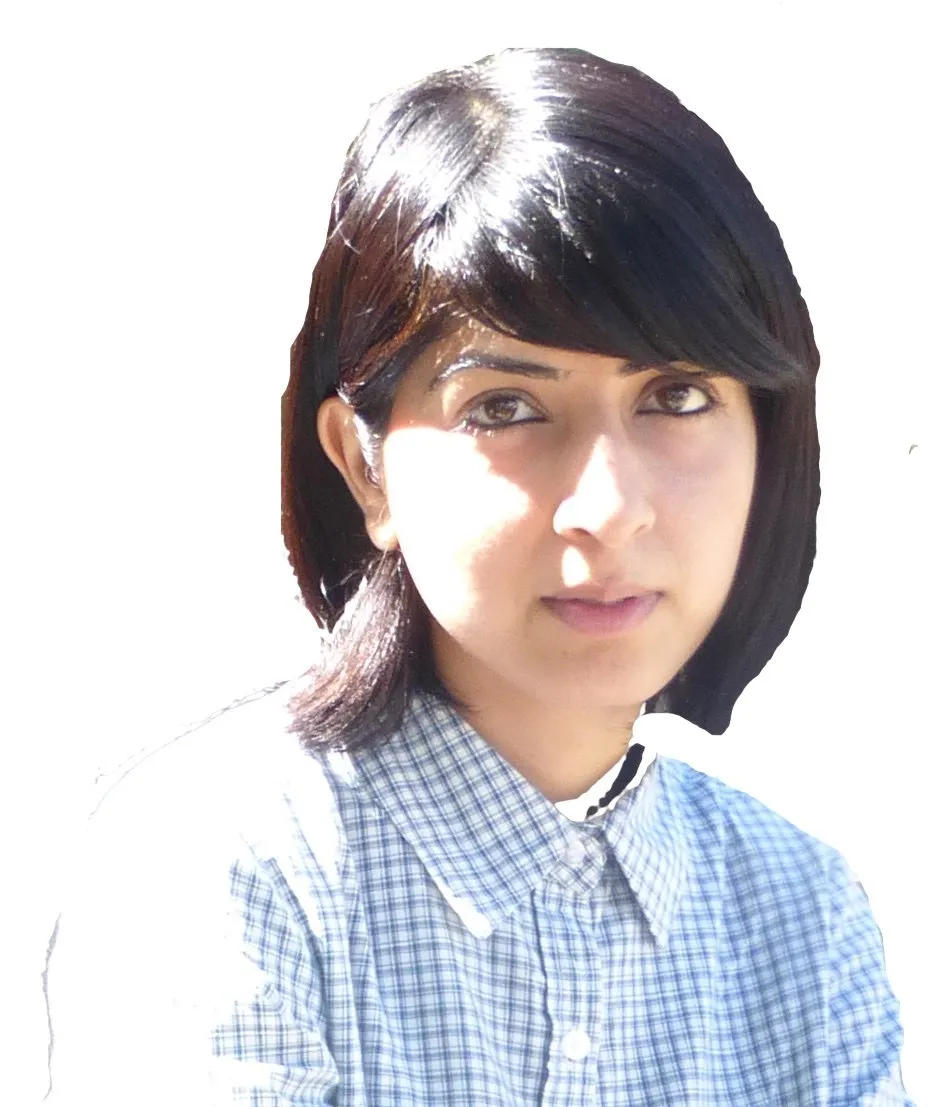
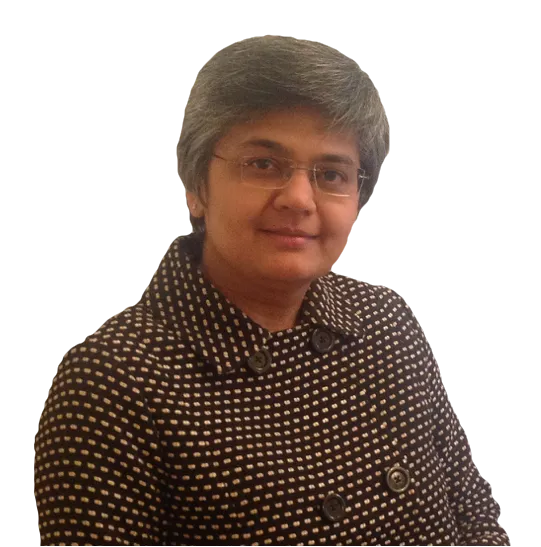
{"id":365,"date":"2015-03-09T18:28:21","date_gmt":"2015-03-09T18:28:21","guid":{"rendered":"https:\/\/timelesslifeskills.org\/cttc\/?page_id=365"},"modified":"2023-05-12T06:24:23","modified_gmt":"2023-05-12T06:24:23","slug":"vandita-pant","status":"publish","type":"page","link":"https:\/\/timelesslifeskills.org\/cttc\/vandita-pant\/","title":{"rendered":"Vandita Pant"},"content":{"rendered":"<section class=\"wpb-content-wrapper\"><p>[vc_row bg_type=&#8221;no_bg&#8221; css=&#8221;.vc_custom_1426179544665{margin-bottom: 0px !important;border-bottom-width: 0px !important;padding-bottom: 0px !important;}&#8221;][vc_column width=&#8221;1\/4&#8243; css=&#8221;.vc_custom_1426179552428{margin-bottom: 0px !important;border-bottom-width: 0px !important;padding-bottom: 0px !important;}&#8221;]<div class=\"ult-new-ib ult-ib-effect-style1  ult-ib-resp  \" data-min-width=\"768\" data-max-width=\"900\" style=\"background:#666666;\" data-opacity=\"1\" data-hover-opacity=\"0.5\" ><img class=\"ult-new-ib-img\" style=\"opacity:1;\" alt=\"\" src=\"https:\/\/timelesslifeskills.org\/cttc\/wp-content\/uploads\/2015\/03\/Vandita-2.png\"   \/><div id=\"interactive-banner-wrap-5290\" class=\"ult-new-ib-desc\" style=\"\"><h2 class=\"ult-new-ib-title ult-responsive\"  data-ultimate-target='#interactive-banner-wrap-5290 .ult-new-ib-title'  data-responsive-json-new='{\"font-size\":\"\",\"line-height\":\"\"}'  style=\"font-family:&#039;Candal&#039;;font-weight:normal;\">Vandita Pant<\/h2><div class=\"ult-new-ib-content ult-responsive\"  data-ultimate-target='#interactive-banner-wrap-5290 .ult-new-ib-content'  data-responsive-json-new='{\"font-size\":\"desktop:16px;\",\"line-height\":\"\"}'  style=\"font-family:&#039;Candal&#039;;font-weight:normal;color:#ffffff;\"><p>Business Treasurer,<br \/>\nRBS<\/p><\/div><\/div><\/div>[\/vc_column][vc_column width=&#8221;3\/4&#8243;][vc_column_text css=&#8221;.vc_custom_1426232894860{margin-bottom: 0px !important;border-bottom-width: 0px !important;padding-bottom: 0px !important;}&#8221;]<\/p>\n<blockquote>\n<h5>You may not at the beginning of your career really know what will float your boat but it is important that you discover over time what it is that you will enjoy doing most of your waking hours and make that your pursuit.<\/h5>\n<\/blockquote>\n<p>[\/vc_column_text][vc_column_text]<strong><span style=\"color: #808080;\">Vandita, a 1992 IIM Lucknow alumnus, has had a long, enriching career in the world of banking and finance. She\u00a0started her\u00a0career with a specialised Financial\u00a0consulting firm\u00a0followed by a three\u00a0year stint with BNP Paribas. She joined ABN\u00a0Amro\u00a0Bank in India in 1997 and via the\u00a0acquisition route, became part of RBS Group\u00a0in 2007. During her 23 years of banking career,\u00a0Vandita\u00a0has undertaken varied roles\u00a0in Distressed Debt Restructuring, Coverage, Debt\u00a0Capital\u00a0Markets,\u00a0Structured Finance, Risk\u00a0Management\u00a0and Treasury\u00a0functions starting in India and then based in Singapore, Japan and for the last 10 years in the UK.\u00a0Her Treasury experience since after the financial crisis\u00a0has included being Global Head of Balance Sheet &amp; Liquidity Management in the investment bank and Global Head of Capital Management &amp; Markets for RBS group.\u00a0In her current role as the Business Treasurer, she heads the Treasury teams for Commercial, Retail, Business and Private Banking.\u00a0Treasurers of Ulster Bank (Irish bank), RBS NV (the Dutch bank), RBS International (Jersey Bank) and Coutts also report to her.<\/span><\/strong>[\/vc_column_text][\/vc_column][\/vc_row][vc_row bg_type=&#8221;no_bg&#8221; css=&#8221;.vc_custom_1426179535950{margin-top: 0px !important;border-top-width: 0px !important;padding-top: 0px !important;background-position: center !important;background-repeat: no-repeat !important;background-size: contain !important;}&#8221;][vc_column][vc_column_text css=&#8221;.vc_custom_1425910104066{margin-bottom: 0px !important;border-bottom-width: 0px !important;padding-bottom: 0px !important;}&#8221;]<\/p>\n<h4><strong><span style=\"color: #000080;\">What sort of formal education is an absolute essential for your profession? Also, could you share with us the kind of internship or experience that would be helpful for a young person considering this line of work?<\/span> <\/strong><\/h4>\n<p>[\/vc_column_text][vc_column_text]Broadly careers in banking can be in different types of banking like retail banking (banking for individuals), corporate banking (banking for businesses\/companies), investment banking (mergers and acquisitions advice and trading in equity, currencies, bonds and commodities). Except for starting in retail banking or bank branch roles, where you can start your career with graduation in any stream, for all other types of jobs in banking, you have a longer career progression with some financial or management education like MBA, CA, CFA.<\/p>\n<p>The complexion of retail banking is changing because of mobile\/digital banking and hence acquiring ICT skills or big data analysis skills will also get a young person an inroad into retail banking.<\/p>\n<p>Besides doing an internership in a bank, a young person could also try to get exposure to the finance function of any business, or get some experience in any other financial services company like brokers, researchers, rating agencies or financial consulting firms.[\/vc_column_text][vc_column_text css=&#8221;.vc_custom_1425903775143{margin-bottom: 0px !important;border-bottom-width: 0px !important;padding-bottom: 0px !important;}&#8221;]<\/p>\n<h4><span style=\"color: #000080;\"><strong>If you simply had to draft that elevator pitch for your profession, what would it be?<\/strong><\/span><\/h4>\n<p>[\/vc_column_text][vc_column_text]One of the oldest professions, it will be always be needed as long as there are people and businesses with a need to borrow and save, and with technology changing the contours, there are exciting days ahead.[\/vc_column_text][vc_column_text css=&#8221;.vc_custom_1425903866325{margin-bottom: 0px !important;border-bottom-width: 0px !important;padding-bottom: 0px !important;}&#8221;]<\/p>\n<h4><span style=\"color: #000080;\"><strong>What are the new trends you notice that are changing the complexion of your profession?<\/strong><\/span><\/h4>\n<p>[\/vc_column_text][vc_column_text]Post the financial crisis of 2008, banking is undergoing a paradigm shift globally. The change in regulatory landscape is the biggest driver of changing business models for banks as they are reassessing the businesses in which they operate (many banks are reducing their trading operations) and their geographical footprint (moving away from being universal global banks to being \u2018home-based\u2019 or regional banks).<\/p>\n<p>Globally retail branch banking is undergoing a massive change due to rise of digital\/mobile banking and with a potential threat of technology companies competing with banks in this space (think Paypal). Banks will continue to look for cost-efficiencies in processing millions of transactions that happen and increasingly in analytical work, which may give rise to job opportunities in hubs created especially for such backoffice and analytical work (which may not be in the same location where the bank operates).[\/vc_column_text][\/vc_column][\/vc_row][vc_row bg_type=&#8221;no_bg&#8221; css=&#8221;.vc_custom_1425906704242{margin-bottom: 0px !important;border-bottom-width: 0px !important;padding-bottom: 0px !important;}&#8221;][vc_column width=&#8221;3\/4&#8243; css=&#8221;.vc_custom_1425906721247{margin-right: 0px !important;margin-bottom: 0px !important;border-right-width: 0px !important;border-bottom-width: 0px !important;padding-right: 0px !important;padding-bottom: 0px !important;}&#8221;][vc_column_text css=&#8221;.vc_custom_1425903968707{margin-bottom: 0px !important;border-bottom-width: 0px !important;padding-bottom: 0px !important;}&#8221;]<\/p>\n<h4><span style=\"color: #000080;\"><strong>Show me the money! How do you see this profession faring 20 years down the line?<\/strong><\/span><\/h4>\n<p>[\/vc_column_text][vc_column_text css=&#8221;.vc_custom_1425998740219{margin-right: 0px !important;border-right-width: 0px !important;padding-right: 0px !important;}&#8221;]I think with technology facilitating the distribution (ATMs, mobile banking) and automation in processing, number of banking jobs will contract globally over the next 20 years. Furthermore, the standing of banking sector being the most financially lucrative career will diminish as the competition from other in-demand career choices (technology linked options) and acceptance of entrepreneurship as a viable career option grows.[\/vc_column_text][vc_column_text css=&#8221;.vc_custom_1425904104704{margin-bottom: 0px !important;border-bottom-width: 0px !important;padding-bottom: 0px !important;}&#8221;]<\/p>\n<h4><span style=\"color: #000080;\"><strong>What do you do when you are stuck with a problem?<\/strong><\/span><\/h4>\n<p>[\/vc_column_text][vc_column_text]Most of the problems I face relate to people and stakeholder management (motivation and leadership issues, investor relations and engagement with banking regulators) and strategic issues like changes needed in the business mix of the bank due to changing regulations, shape of bank\u2019s future and targets to be achieved by the bank.<\/p>\n<p>I think problem solving approach is quite similar across different domains. You need analytical skills, ability to take inputs from different people with different perspectives, assess options based on risk-reward parameters and consider feedback loops.[\/vc_column_text][\/vc_column][vc_column width=&#8221;1\/4&#8243;][vc_single_image image=&#8221;386&#8243; img_size=&#8221;large&#8221; alignment=&#8221;center&#8221;][\/vc_column][\/vc_row][vc_row bg_type=&#8221;no_bg&#8221; css=&#8221;.vc_custom_1425999002227{margin-top: 0px !important;margin-bottom: 0px !important;border-top-width: 0px !important;border-bottom-width: 0px !important;padding-top: 0px !important;padding-bottom: 0px !important;}&#8221;][vc_column][vc_column_text]When I face a problem I do much the same. I start with what is called systems thinking that helps break down the problem into its component parts and for each of those I look for different drivers of the problem and their interplay, get the big picture context right, define the needed outcomes, seek inputs from my team and specialists, scan the environment to understand the externalities and their impact, set-out the options with their pros and cons, consider other risks, opportunities and constraints and choose the most optimal solution.[\/vc_column_text][vc_column_text css=&#8221;.vc_custom_1425326047054{margin-bottom: 0px !important;border-bottom-width: 0px !important;padding-bottom: 0px !important;}&#8221;]<\/p>\n<h4><span style=\"color: #000080;\"><b>When we\u2019re in school, we\u2019re told cheating is bad \u2013 \u2018Don\u2019t talk to each other, don\u2019t discuss.\u2019 And then as we come out of it, we begin to realize that there\u2019s something called \u201ccollaborative thinking\u201d and it\u2019s not bad! What\u2019s your opinion?<\/b><\/span><\/h4>\n<p>[\/vc_column_text][vc_column_text]I think collaborative thinking is a must because as problems become more complex and require different expertise or perspectives, an individual working alone cannot find the optimal solution. However, collaborative thinking should not become an excuse for shallow thinking in an individual. In fact, collaborative thinking only works when each individual in the group makes a substantive contribution with deep knowledge in area of their expertise and engages and builds on others viewpoint.[\/vc_column_text][\/vc_column][\/vc_row][vc_row bg_type=&#8221;no_bg&#8221; css=&#8221;.vc_custom_1425999018432{margin-top: 0px !important;margin-bottom: 0px !important;border-top-width: 0px !important;border-bottom-width: 0px !important;padding-top: 0px !important;padding-bottom: 0px !important;}&#8221;][vc_column width=&#8221;2\/3&#8243; css=&#8221;.vc_custom_1425999029582{margin-top: 0px !important;border-top-width: 0px !important;padding-top: 0px !important;}&#8221;][vc_column_text css=&#8221;.vc_custom_1425467047817{margin-bottom: 0px !important;border-bottom-width: 0px !important;padding-bottom: 0px !important;}&#8221;]<\/p>\n<h4><span style=\"color: #000080;\"><strong>How do you overcome roadblocks in your profession?<\/strong><\/span><\/h4>\n<p>[\/vc_column_text][vc_column_text]If by that you mean roadblocks in career progression then you can tackle this by creatively thinking of your next career move. The shortest path to a senior position may not always be a conventional vertical progression. Sometimes taking a lateral move to diversify your experience can be more value-adding in long-term. For example, having been in the Corporate Banking dealing with clients, I moved to Risk Management, which gave me a different perspective and a combination of both these experiences has stood me in good stead in my current role in Treasury. My message is &#8211; don&#8217;t be afraid to step out of your comfort zone.<\/p>\n<p>The key to successful career progression is to keep learning by widening your exposure to different functions in banking while still ensuring that you deeply understand that function and keeping your knowledge current as the landscape changes.[\/vc_column_text][\/vc_column][vc_column width=&#8221;1\/3&#8243;][vc_row_inner][vc_column_inner]<div class=\"ult-spacer spacer-69e8c636d96cf\" data-id=\"69e8c636d96cf\" data-height=\"80\" data-height-mobile=\"5\" data-height-tab=\"5\" data-height-tab-portrait=\"5\" data-height-mobile-landscape=\"5\" style=\"clear:both;display:block;\"><\/div>[\/vc_column_inner][\/vc_row_inner][vc_column_text]<\/p>\n<hr \/>\n<h5 style=\"text-align: right;\"><strong><span style=\"color: #993300;\">Collaborative thinking should not become an excuse for shallow thinking in an individual.<\/span><\/strong><\/h5>\n<hr \/>\n<p>[\/vc_column_text][\/vc_column][\/vc_row][vc_row bg_type=&#8221;no_bg&#8221; css=&#8221;.vc_custom_1425469856907{margin-top: 0px !important;border-top-width: 0px !important;padding-top: 0px !important;}&#8221;][vc_column][vc_column_text css=&#8221;.vc_custom_1425904291249{margin-bottom: 0px !important;border-bottom-width: 0px !important;padding-bottom: 0px !important;}&#8221;]<\/p>\n<h4><span style=\"color: #000080;\"><strong>Did you ever want to change the world?<\/strong><\/span><\/h4>\n<p>[\/vc_column_text][vc_column_text]Yes, I did and I still think in my little way I am doing that through my work. Though it may not fit the conventional view!<\/p>\n<p>I work for a bank which was severely hit during the financial crisis. As this bank supports one in every three businesses in the UK and millions of individuals who bank with us, the need to turn this bank around was hugely critical. I think by playing a small part in this challenging turn around I have made a meaningful contribution which I am proud of.[\/vc_column_text][vc_column_text css=&#8221;.vc_custom_1425926602755{margin-bottom: 0px !important;border-bottom-width: 0px !important;padding-bottom: 0px !important;}&#8221;]<\/p>\n<h4><span style=\"color: #000080;\"><strong>Describe a typical (business-as-usual) day and an atypical (screw-up-fairy-lives-here) day at work. <\/strong><\/span><\/h4>\n<p>[\/vc_column_text][vc_column_text]I am in office by 8 am and my typical day has meetings, meetings and more meetings! Some in which I need to take decisions based on different recommendations, some in which I make presentations to the regulators or the executive committees, some with my direct reports either to assess progress on initiatives or to deal with people issues. I also make sure I have some time to read and put my thoughts together on the priorities to be tackled and emerging issues. I usually leave office by 7 pm. As far as possible, I try not to be on my work Blackberry over the weekends. However, I do spend 3-4 hours Sunday evenings to catch up on work related reading pile.<\/p>\n<p>An atypical day is when my planned schedule goes for a toss as some emerging crisis requires my immediate attention. This could be an unexpected geo-political development which has ramification for our Bank\u2019s presence in a country or our business, or a speech or announcement by a banking regulator that requires our immediate response, or a change in bank\u2019s credit rating announced by the rating agencies. On such days there are no \u2018regular\u2019 office hours![\/vc_column_text][vc_column_text css=&#8221;.vc_custom_1425904457631{margin-bottom: 0px !important;border-bottom-width: 0px !important;padding-bottom: 0px !important;}&#8221;]<\/p>\n<h4><span style=\"color: #000080;\"><strong>What would your advice be to a young person at the start of his or her career and confused about pursuing passion versus being pragmatic?<\/strong><\/span><\/h4>\n<p>[\/vc_column_text][vc_column_text]I think if you choose something that is just for pragmatism and then never grow to like it, you will never enjoy it and hence, seldom be really successful at it. You may not at the beginning of your career really know what will float your boat but it is important that you discover over time what is that you will enjoy doing most of your waking hours and make that your pursuit.[\/vc_column_text][vc_column_text css=&#8221;.vc_custom_1425904610200{margin-bottom: 0px !important;border-bottom-width: 0px !important;padding-bottom: 0px !important;}&#8221;]<\/p>\n<h4><span style=\"color: #000080;\"><strong>If you could do some time-travelling and go back to meet yourself at 17, 25, 35, what would you say to your selves then?<\/strong><\/span><\/h4>\n<p>[\/vc_column_text][vc_column_text]I don&#8217;t have many regrets or instructions for my younger self to do things dramatically differently. At 17 I was looking forward to college life \u2013 to study well, read a lot and enjoy myself with my friends thoroughly, which is what I did and I would still tell my 17 year old self to do the same.<\/p>\n<p>At 25 \u2018getting married\u2019 was not my pre-occupation as I believed it will happen when it will happen but it needed to happen with the right person!\u00a0I would still tell my 25-year old self to follow that mantra as I reconnected with my old friend at 28 and found my life partner in him \u2013 the best decision of my life!<\/p>\n<p>Perhaps the only advice to do things differently would be to my 35 year old self, to whom I would say \u2013 be more health-conscious \u2013 eat healthy and exercise.[\/vc_column_text][\/vc_column][\/vc_row][vc_row bg_type=&#8221;no_bg&#8221;][vc_column][vc_column_text css=&#8221;.vc_custom_1425904682047{margin-bottom: 0px !important;border-bottom-width: 0px !important;padding-bottom: 0px !important;}&#8221;]<\/p>\n<h4><span style=\"color: #000080;\"><strong>What are the pitfalls of your profession and how do you mitigate them? Did you have any fears when you were just starting out about this line of work, and were any of them justified?<\/strong><\/span><\/h4>\n<p>[\/vc_column_text][vc_column_text]In banking one major pitfall is long working hours turning into no consideration for health, no time for personal or family life, consequently leading to stress. You can mitigate this by defining your own boundaries and consciously ensuring that you make time for things that are important to you. For happiness in life, doing work that you enjoy is important but just work sans strong personal significant relationships and health will never bring joy!<\/p>\n<p>In banking, similar to other well-paying professions, one may feel \u2018stuck\u2019 in it, even if one is not really \u2018into\u2019 it, simply because the financial rewards may not be matched by alternate options. Mitigation is \u2013 regular self-checks to see if you are really enjoying what you are doing and consider the overall \u2018package\u2019 including whether you are enjoying your work, find meaning in your work and financial reward, to compare the options.[\/vc_column_text][vc_column_text css=&#8221;.vc_custom_1425904771962{margin-bottom: 0px !important;border-bottom-width: 0px !important;padding-bottom: 0px !important;}&#8221;]<\/p>\n<h4><span style=\"color: #000080;\"><strong>What is the kind of supplementary informal learning that will give you that edge on this job? Is there any specific reading that you engage in, any other resources?<\/strong><\/span><\/h4>\n<p>[\/vc_column_text][vc_column_text]Pink newspapers like <em>Financial Times<\/em> or <em>Economic Times<\/em>, <em>Wall Street Journal<\/em>.<\/p>\n<p>Magazines like <em>The Economist<\/em>.<\/p>\n<p>Financial Analysis or Corporate Finance courses which today may be available as free MOOCs.<\/p>\n<p>Industry trend articles available on websites of consulting firms like McKinsey that trace broader trends in the banking industry.<\/p>\n<p>I would recommend some of the books written on the last financial crisis as they tell us about the mistakes made and reiterate how simple rules of banking when ignored, can cause havoc &#8211;<em>Too Big to Fail, Fault lines, The Big Shot, Boomerang, Hubris, The Alchemists: Three Central Bankers and a World on Fire, Crisis Economics, The Black Swan<\/em>.<\/p>\n<p>And some financial classics &#8211; <em>The Misbehaviour of Markets, The Ascent of Money, and Against the Gods: The Remarkable Story of Risk<\/em>.[\/vc_column_text][vc_column_text]<\/p>\n<h4><span style=\"color: #000080;\"><strong>What is most rewarding about your job?<\/strong><\/span><\/h4>\n<p>[\/vc_column_text][vc_column_text]Two things \u2013 one, to see the impact of your work in the way the bank\u2019s business model and the financials positively change over a period of time and two, to develop people in a way that they achieve their potential and grow in their roles.[\/vc_column_text][\/vc_column][\/vc_row][vc_row][vc_column width=&#8221;1\/3&#8243;][vc_column_text css=&#8221;.vc_custom_1426008808726{margin-right: 5px !important;}&#8221;]<\/p>\n<hr \/>\n<h5 style=\"text-align: left;\"><strong><span style=\"color: #993300;\">I treat frustrations which can creep in once in a while as transient and not let them define my attitude towards work and my life.<\/span><\/strong><\/h5>\n<hr \/>\n<p>[\/vc_column_text][\/vc_column][vc_column width=&#8221;2\/3&#8243;][vc_column_text]<\/p>\n<h4><span style=\"color: #000080;\"><strong>Do you still have days when you think, \u2018What the hell am I doing with my life?\u2019 How do you get over that, if you do?<\/strong><\/span><\/h4>\n<p>[\/vc_column_text][vc_column_text]I love my life! And my work \u2013 I treat frustrations which can creep in once in a while as transient and not let them define my attitude towards work and my life.[\/vc_column_text][\/vc_column][\/vc_row][vc_row][vc_column][vc_column_text]<\/p>\n<h4><span style=\"color: #000080;\"><strong>What\u2019s your advice for a resume that\u2019s just about to enter circulation?\u00a0What are the musts it should have that recruiters look for? And the absolute don\u2019ts, if any?<\/strong><\/span><\/h4>\n<p>[\/vc_column_text][vc_column_text]Besides educational qualifications, mention in your CV any leadership roles you have played (school or college prefect, head of a club or society), any projects you have done, any internships, any voluntary or social work you have been involved in. Mention memberships of professional associations and interest groups. Highlight any co-curricular achievements and hobbies you are passionate about.[\/vc_column_text][vc_column_text]<\/p>\n<h4><span style=\"color: #000080;\"><strong>How does one network in the beginning to get that initial presence felt, in this profession?<\/strong><\/span><\/h4>\n<p>[\/vc_column_text][vc_column_text]Have an updated profile on a professional social network like Linked In, reach out to your known network and then build on it. You can even publish your articles on LinkedIn. Attend placement talks, try to get some work experience even if it is unpaid summer assignments with a bank. Connect with your alumni working in banking to seek advice and mentorship.[\/vc_column_text][\/vc_column][\/vc_row][vc_row][vc_column][vc_column_text]<\/p>\n<h6>Interview conducted by Pooja Pande.<\/h6>\n<p>[\/vc_column_text]<div class=\"ult-spacer spacer-69e8c636d96f0\" data-id=\"69e8c636d96f0\" data-height=\"40\" data-height-mobile=\"10\" data-height-tab=\"20\" data-height-tab-portrait=\"20\" data-height-mobile-landscape=\"10\" style=\"clear:both;display:block;\"><\/div>[\/vc_column][\/vc_row]<\/p>\n<\/section>","protected":false},"excerpt":{"rendered":"<p>[vc_row bg_type=&#8221;no_bg&#8221; css=&#8221;.vc_custom_1426179544665{margin-bottom: 0px !important;border-bottom-width: 0px !important;padding-bottom: 0px !important;}&#8221;][vc_column width=&#8221;1\/4&#8243; css=&#8221;.vc_custom_1426179552428{margin-bottom: 0px !important;border-bottom-width: 0px !important;padding-bottom: 0px !important;}&#8221;][\/vc_column][vc_column width=&#8221;3\/4&#8243;][vc_column_text css=&#8221;.vc_custom_1426232894860{margin-bottom: 0px !important;border-bottom-width: 0px !important;padding-bottom: 0px !important;}&#8221;] You may not at the beginning of your career really know what will float your boat but it is important that you discover over time what it is that you &hellip;<\/p>\n<p class=\"read-more\"> <a class=\"\" href=\"https:\/\/timelesslifeskills.org\/cttc\/vandita-pant\/\"> <span class=\"screen-reader-text\">Vandita Pant<\/span> Read More &raquo;<\/a><\/p>\n","protected":false},"author":1,"featured_media":0,"parent":0,"menu_order":0,"comment_status":"closed","ping_status":"closed","template":"","meta":{"site-sidebar-layout":"no-sidebar","site-content-layout":"plain-container","ast-global-header-display":"","ast-banner-title-visibility":"","ast-main-header-display":"","ast-hfb-above-header-display":"","ast-hfb-below-header-display":"","ast-hfb-mobile-header-display":"","site-post-title":"disabled","ast-breadcrumbs-content":"","ast-featured-img":"disabled","footer-sml-layout":"","theme-transparent-header-meta":"","adv-header-id-meta":"","stick-header-meta":"","header-above-stick-meta":"","header-main-stick-meta":"","header-below-stick-meta":""},"_links":{"self":[{"href":"https:\/\/timelesslifeskills.org\/cttc\/wp-json\/wp\/v2\/pages\/365"}],"collection":[{"href":"https:\/\/timelesslifeskills.org\/cttc\/wp-json\/wp\/v2\/pages"}],"about":[{"href":"https:\/\/timelesslifeskills.org\/cttc\/wp-json\/wp\/v2\/types\/page"}],"author":[{"embeddable":true,"href":"https:\/\/timelesslifeskills.org\/cttc\/wp-json\/wp\/v2\/users\/1"}],"replies":[{"embeddable":true,"href":"https:\/\/timelesslifeskills.org\/cttc\/wp-json\/wp\/v2\/comments?post=365"}],"version-history":[{"count":67,"href":"https:\/\/timelesslifeskills.org\/cttc\/wp-json\/wp\/v2\/pages\/365\/revisions"}],"predecessor-version":[{"id":2045,"href":"https:\/\/timelesslifeskills.org\/cttc\/wp-json\/wp\/v2\/pages\/365\/revisions\/2045"}],"wp:attachment":[{"href":"https:\/\/timelesslifeskills.org\/cttc\/wp-json\/wp\/v2\/media?parent=365"}],"curies":[{"name":"wp","href":"https:\/\/api.w.org\/{rel}","templated":true}]}}