WHAT DO YOU HAVE?
Module 1 · 6 min
A resource is anything useful. You have more than you think.
Try this first: The candle puzzle
Fix the candle to the wall so it can burn without dripping wax on the table. You may use only what you see.
Empty the box. Pin the box to the wall to make a shelf, stand the candle in it, and light it.
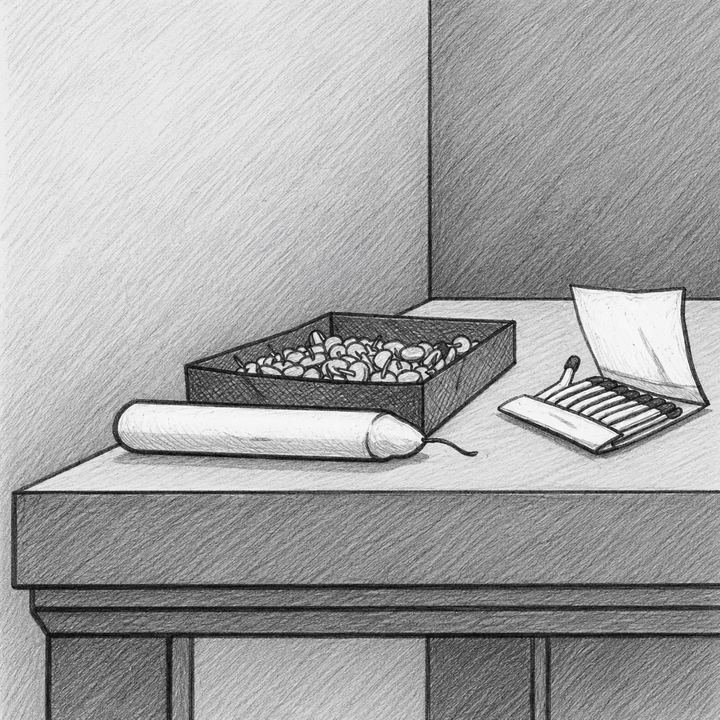
Pause & ponder: The box was there all along
Most people see the box only as a container for the pins. Once you see it as a shelf, the puzzle solves itself.
Like the box, many of your resources are invisible at first.
The idea: Your resources work together
Tap each one. You are in the middle of all of them.
- Time, energy, attention · Where do you spend them?
- Relationships & trust · Help, cooperation, reputation
- Health · Physical and mental
- Knowledge & skills · Learn, practice, apply
- Technology & AI · Tools, used with judgement
- Money · Use, save, invest, donate
Your turn: Resources are all around you
Tap everything you have.
- Inside you · curiosity, health, attention, patience, perseverance, imagination, a skill I'm good at
- Around you · a library, internet access, tools, land, nature, school facilities
- People · friends, parents, teachers, neighbours, community knowledge, someone who trusts me
- Life · a difficulty I overcame, a mistake I learned from, responsibilities I carry
The idea: Having is not using
Learn to recognise it. Learn to use it well.
“Having something is not the same as using it as a resource.”
Think about it: Helps you or holds you back?
The same resource can do both. Tap to see.
- Phone & internet · Learning, staying in touch · Endless scrolling, false news
- Friends · Support, ideas, encouragement · Peer pressure
- Confidence · Willingness to try · Overconfidence, not listening
- Curiosity · Exploring, asking questions · Never finishing anything
- Persistence · Staying with a hard problem · Sticking with a wrong approach
- AI · An effective tool: explains, quizzes, gives hints · Dependence: AI does your thinking for you
The habit: Four questions
Ask these again and again.
- What do I have? · Notice your resources, including the invisible ones.
- What can I do with it? · Use it well. Don't waste it.
- Who needs it? · You, and others around you.
- How can I do it better? · Improve it, and create more value.
Compounding: Small things add up
Small actions look unimportant today. Repeated for months, they become a big advantage.
Your turn: Pause & ponder
Name three things you have that you never thought of as resources.
Apply: Try this week
Choose one invisible resource and use it on purpose this week.
At the end of the week, ask: what happened? Did it help me or someone else?
Well done!
Next: Module 2 · Your mind